From Words to Images
Nobel Prize winners who were also artists
10/10/2025 Art History
Each October, the world turns its gaze towards Stockholm, waiting for the announcement of the Nobel Prices. Established over a century ago, the Nobel Prize has become synonymous with excellence and universal contribution, celebrating those whose work has profoundly transformed human knowledge or culture.
Among all categories, the Nobel Prize in Literature holds a special fascination: it not only recognizes the achievements of exceptional writers but also shapes the global literary canon, influencing how generations read and interpret the world.
When looking at the writers who won the prize, it becomes clear that many of them have expressed their creativity in different ways, not only through written words. For example, some have turned to the visual arts, finding in painting another means of exploring imagination, emotion, and identity.
In examining the legacy of certain Nobel Prize winners in Literature, we discover that for many of them, the pen and the brush coexist as instruments of the same artistic expression.
Rabindranath Tagore, who won the Nobel prize in 1913, was not just an Indian poet, playwright, and essayist but also, towards the end of life, a painter of great originality. The National Gallery of Modern Art in New Delhi houses works such as Head Study and several dancing figures, while the Rabindra-Bhavana Center in Santiniketan preserves about 1,580 of his original paintings.
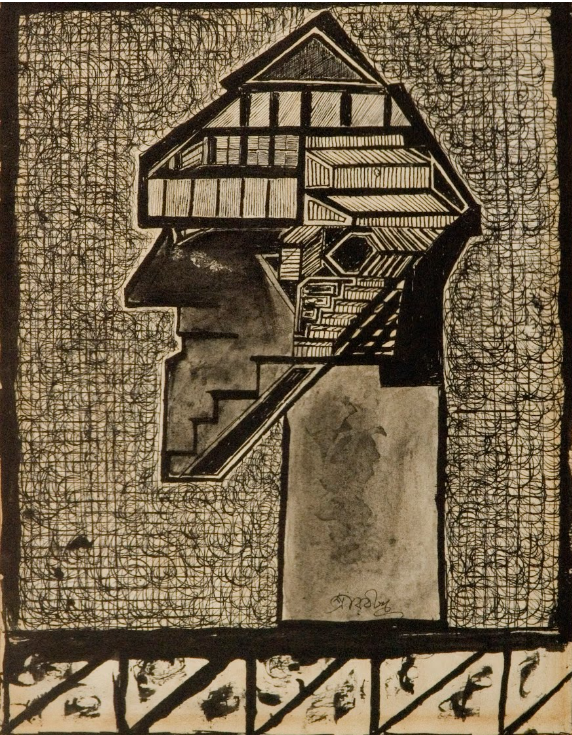
Rabindranath Tagore, Head Study, (Geometric, c. 1928–1929. New Delhi, National Gallery of Modern Art)
Dario Fo, awarded the Nobel Prize in Literature in 1997, trained as a painter at the Accademia di Brera in Milan and sustained throughout his life an intense artistic practice that ran parallel to his theatrical vision. The major retrospective Dario Fo a Milano. Lazzi sberleffi dipinti (Dario Fo in Milan. Pranks and Painted Mockeries), held in 2012, brought together hundreds of works, from sketches to collages and paintings. The Fo Rame Foundation Archive preserves a vast corpus of paintings and mixed-media works, often conceived in dialogue with his literary and theatrical production.
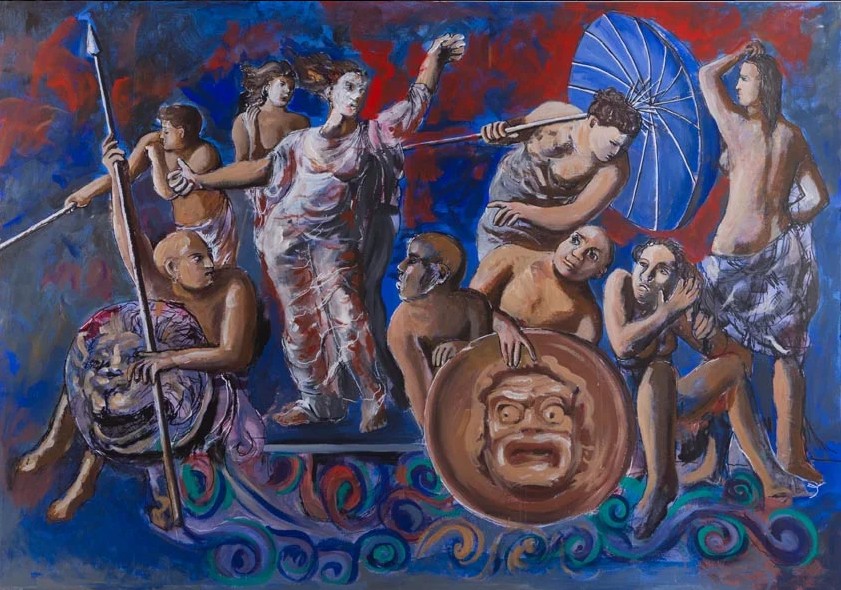
Dario Fo, Lisistrata, 2012
Another example is the Turkish writer Orhan Pamuk, Nobel laureate in 2006. In his autobiographical book Istanbul: Memories of a City, he says that as a young man he dreamed of becoming a painter until the day he decided to dedicate his life to writing, confessing that literature had “killed the painter within me”. But he never abandoned drawing: in 2023 he published Memories of Distant Mountains, a collection of texts accompanied by images taken from his personal sketchbooks.
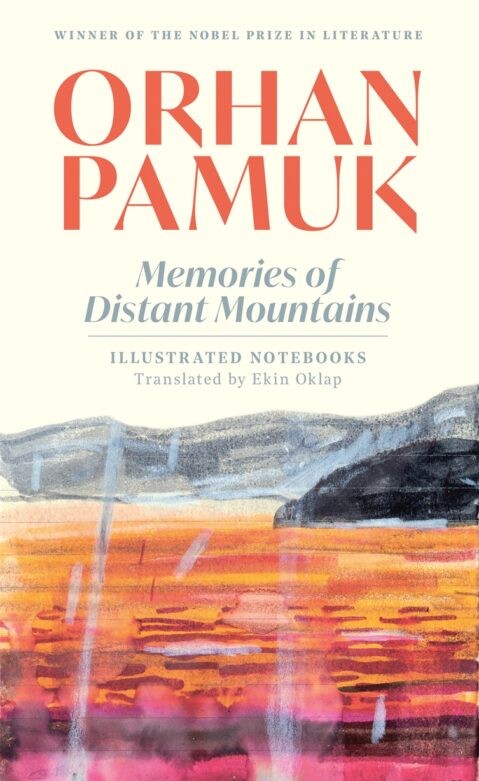
Orhan Pamuk, Sketch of Mantua’s Ducal Palace. Memories of Distant Mountains: Illustrated Notebooks, 2009-2022
Bob Dylan, who won the Nobel Prize for Literature in 2016, has also pursued a recognized visual career. His Drawn Blank Series (including watercolors, gouaches, and sketches) was exhibited at the Kunstsammlungen Chemnitz, followed by The Brazil Series at the Statens Museum for Kunst in Copenhagen and Face Value at the National Portrait Gallery in London. Dylan’s presence in important museums confirms that painting for him is not a secondary activity but an integral part of his plural artistic expression.
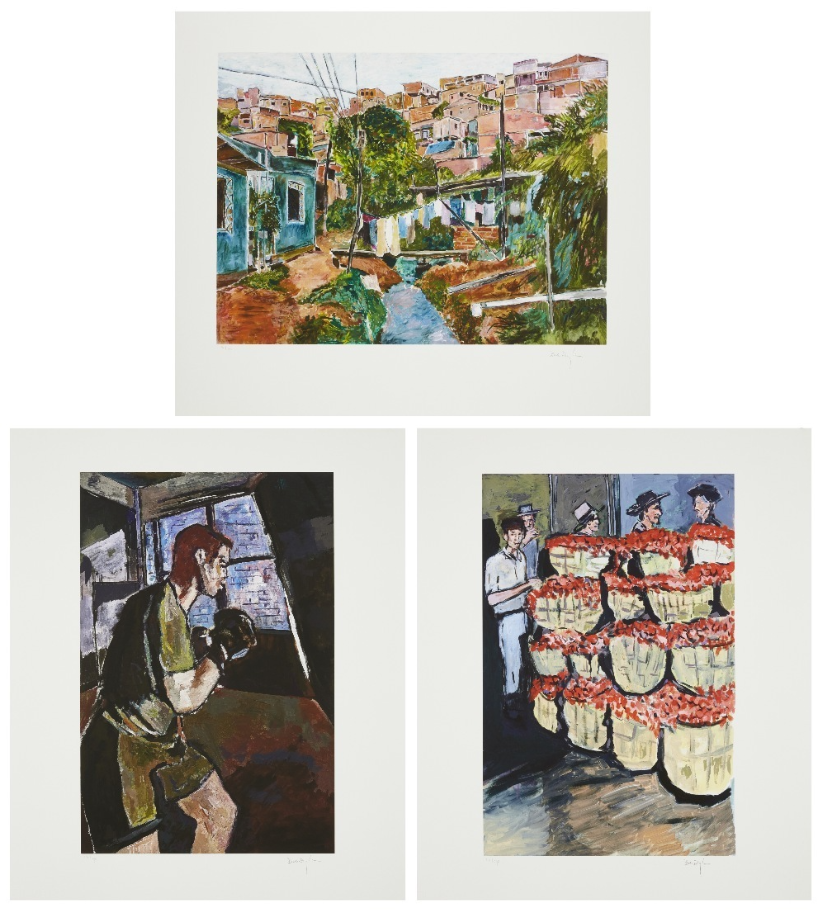
Bob Dylan, Favela Villa Broncos (The Brazil Series), 2010
Ultimately, while the Nobel Prize for Literature was conceived to honor literary achievement, many of its laureates have used the paintbrush as another instrument of artistic language. In their hands, words and images intertwine, reminding us that art rarely confines itself to a single form.