How Time Judges Art
From Greek myths to Renaissance Florence, how rivalry shaped masterpieces
03/10/2025 Art History
The history of art is the history of the art that has come down to us. A total history of art can never exist. Indeed, we will never be able to know all the works of art produced by humankind since the beginning of time. What does this mean? That the history of art is the result of a selection. Almost as if artists were entering into a competition with history.
The idea of art as a form of competition already emerges in ancient Greece, in the famous contest between the painters Zeuxis and Parrhasius narrated by Pliny the Elder. Zeuxis painted a cluster of grapes so lifelike that birds flew down to peck at them. Convinced of his victory, he asked Parrhasius to remove the veil that seemed to cover his painting. Yet the veil itself was painted: Parrhasius had deceived the eye of an artist. At that moment Zeuxis admitted his defeat. This story reveals that art competes not only with reality but also with perception.
The theme of competition returns in the myth that, more than many others, has nourished the European figurative imagination: the Judgment of Paris. During the wedding of Peleus and Thetis, the goddess of discord Eris throws a golden apple “to the most beautiful”. Three goddesses claim it: Hera (power), Athena (intelligence and victory), Aphrodite (love). Zeus, so as not to displease any of them, entrusts the decision to the young Paris, a Trojan prince who at that time lives among the shepherds on Mount Ida. Each offers a gift; Paris chooses Aphrodite, who promises him the love of the beautiful Helen. From that will come the abduction of Helen and, subsequently, the famous Trojan War: an “aesthetic” choice that becomes history.
To see this scene in painting, a measured and narrative example is at the Fogg Art Museum (Harvard Art Museums): the Judgment of Paris by the so-called Master of the Argonaut Panels (ca. 1480, image above). In this work the figures are arranged in a symmetrical space: on the left we notice Zeus inviting the three goddesses to submit to the judgment of Paris, depicted on the right.
From fables and myths we move to the city, where competition becomes a public engine of art. In 1401 in Florence the Arte di Calimala (the guild of merchants of foreign cloth and finishers of wool, responsible for the care of the Baptistery) announces a competition to create new bronze doors for the Baptistery of San Giovanni. The set theme for the trial piece is the Sacrifice of Isaac: among the candidates, Lorenzo Ghiberti, then a very young goldsmith-sculptor, and Filippo Brunelleschi, who would later become the architect of the great dome of the Cathedral, stand out. The panels present two different ways of conceiving the story: more unified and gentler in Ghiberti; more dramatic and fragmented in Brunelleschi. Ghiberti won and began the north door; decades later he received, by invitation, the commission for a second cycle for the east door, which Michelangelo would say was worthy of being called the “Gates of Paradise.” Today the two competition panels can be seen side by side at the National Museum of the Bargello (Florence).
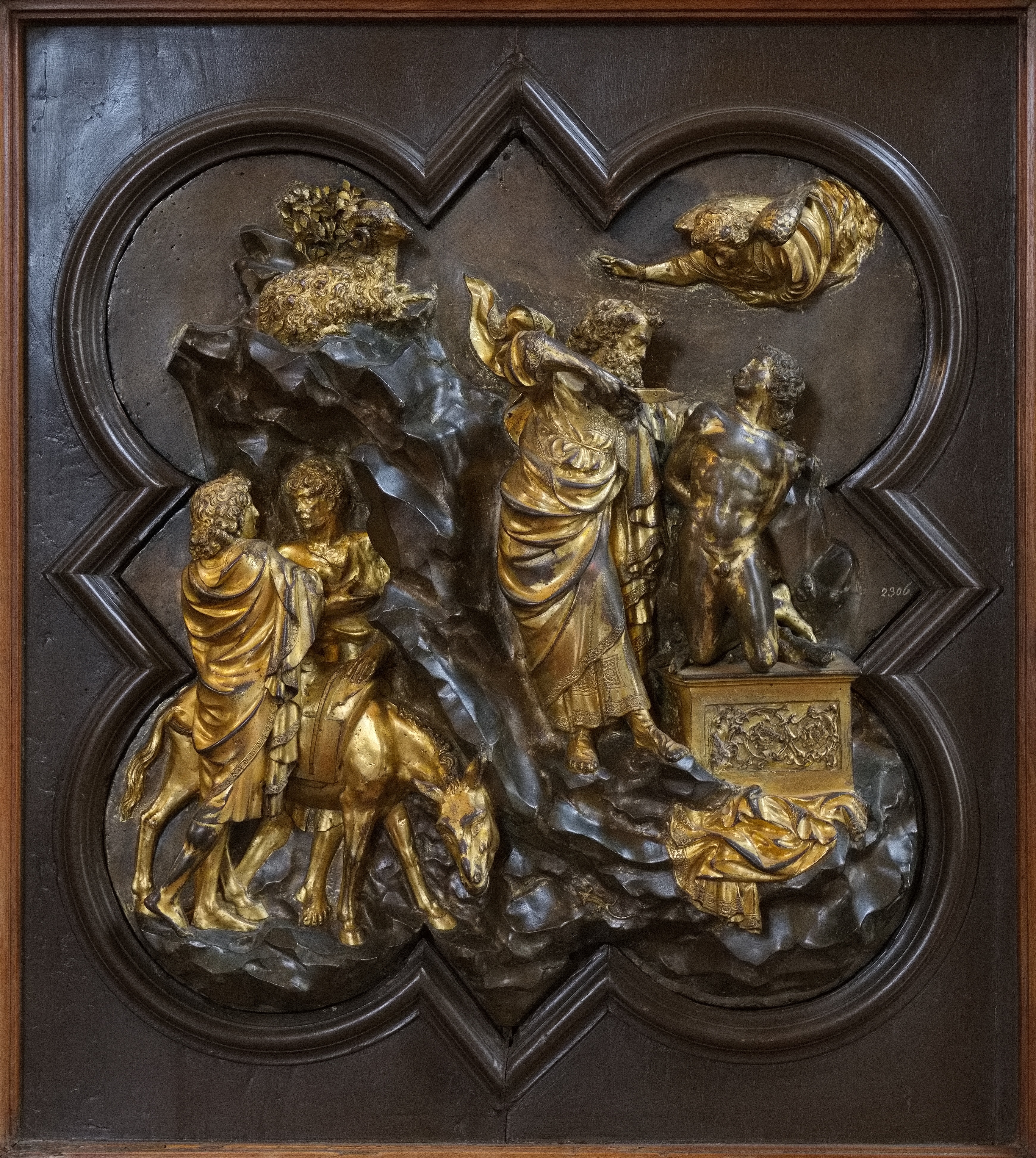
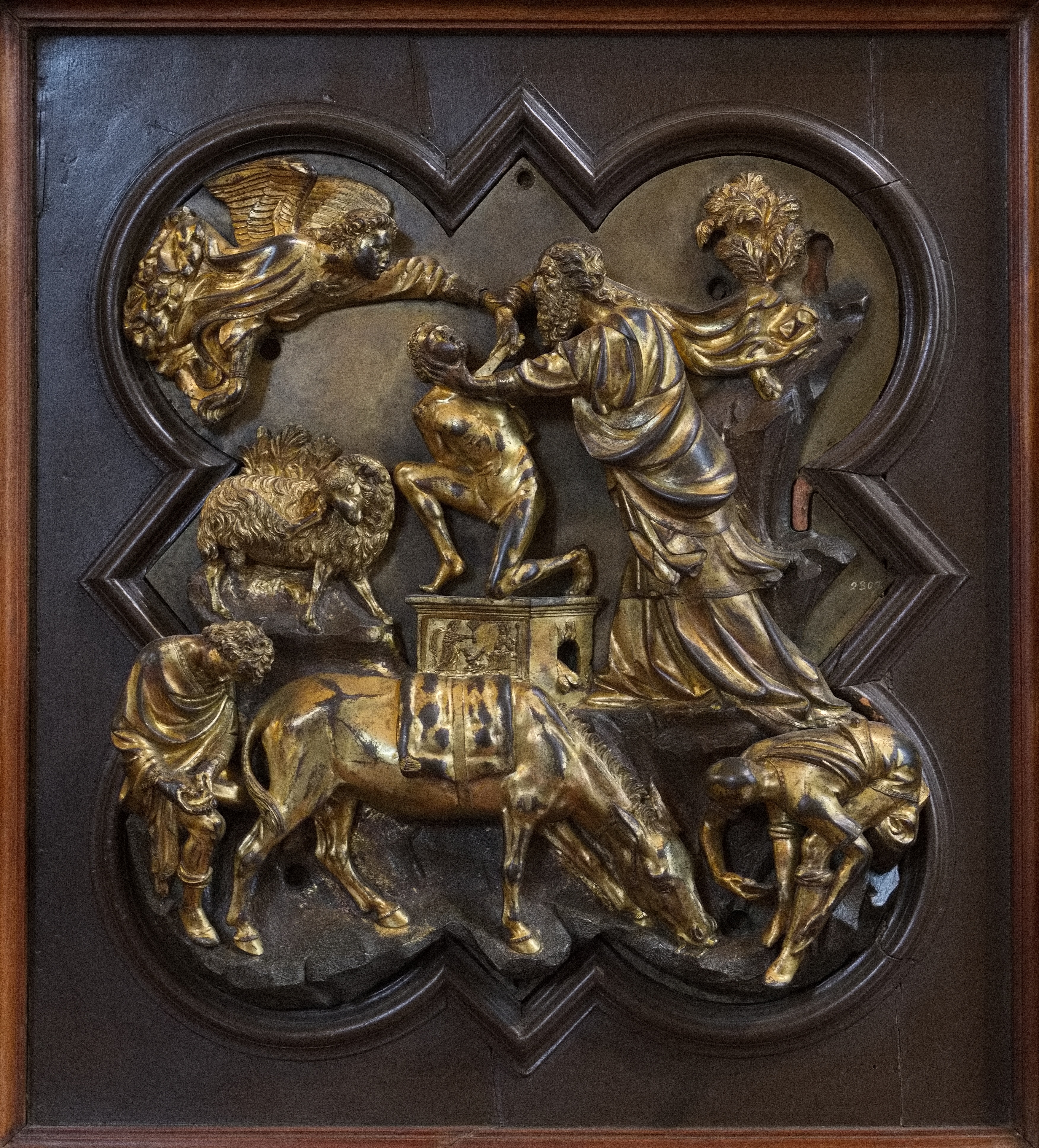
Filippo Brunelleschi, The Sacrifice of Isaac, 1401, Florence, Museo del Bargello
The Greek myth and fifteenth-century Florence are only examples, but they point to the same dynamic: art lives on comparisons. Zeuxis and Parrhasius measure themselves by the illusion of the gaze; Paris turns a choice of beauty into destiny; in Florence, the competition for the Baptistery doors brings forth a vision that becomes a model. In all these cases there is an immediate judgment: the judgment of an artist, of a prince, of a city. But then a more severe judge arrives: time. It is time that decides what remains visible, what ends up in museums, what remerges from the archives or disappears. For this reason, the history of art, like the whole history of culture, is a continuous competition: among works, among gazes, among memories. What we see today is only a small part of what was created, selected by centuries of choices, oblivions, and rediscoveries. And every generation, with its own gaze, sets the contest going again.