Michelangelo and Holbein
From the Laocoön to the Last Judgment: Unveiling Renaissance Mastery
24/03/2024 Art History
Perhaps nothing, like the discovery of the Laocoön statue in Rome in 1506, helps us understand the art of the Renaissance, especially the Italian Renaissance. As is known, Michelangelo Buonarroti himself was present at the finding of the statue.
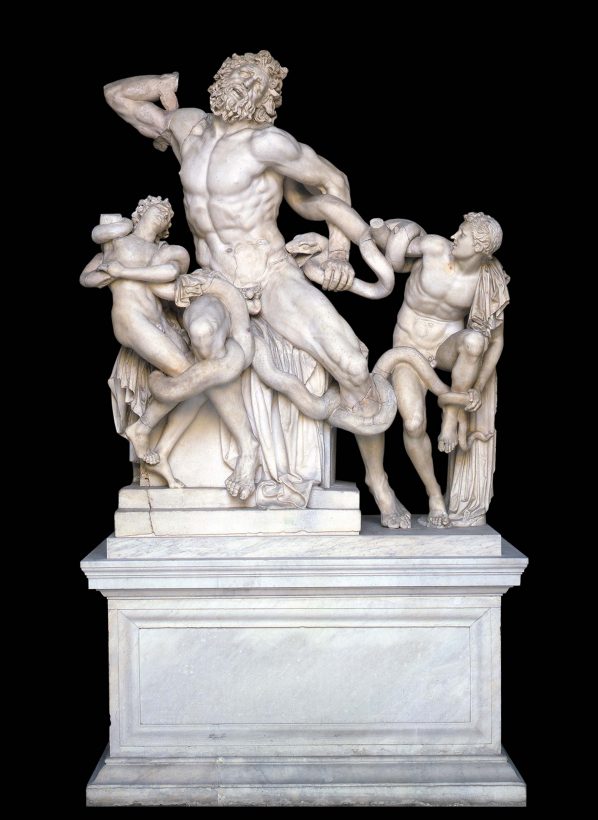
Laocoön and His Sons, 1st century BC-1st century AD, Rome, Vatican Museums
Now let’s look at Michelangelo’s Last Judgment (created after the discovery of the Laocoön). We find the same characteristics that we have now identified: the man is at the centre, and he’s the one who creates space. Look at the figure of Christ: he seems like a conductor giving movement to the entire symphony of the Last Day, just as in the central figure of the Laocoön. And it is even more interesting to note that Michelangelo had this idea long before. Even before the discovery of the Laocoön, at about 17 years old, Michelangelo sculpted the Battle of the Centaurs. The similarities with the Last Judgment are evident, especially when we compare the painted figure of Christ with the sculpted one in the centre of the Battle. In this early work by Michelangelo, the model is always classical art, especially the battle scenes of Roman sarcophagi.
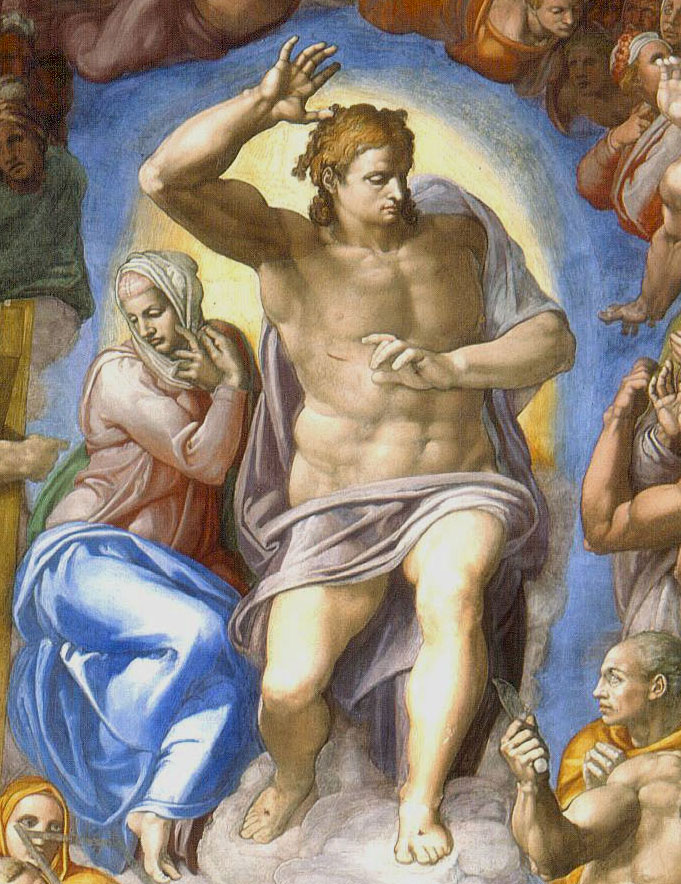
Michelangelo Buonarroti, Mary and Christ, from The Last Judgment, 1536-1541, Rome, Sistin Chapel
Now let’s look at Michelangelo’s Last Judgment (created after the discovery of the Laocoön). We find the same characteristics that we have now identified: the man is at the centre, and he’s the one who creates space. Look at the figure of Christ: he seems like a conductor giving movement to the entire symphony of the Last Day, just as in the central figure of the Laocoön. And it is even more interesting to note that Michelangelo had this idea long before. Even before the discovery of the Laocoön, at about 17 years old, Michelangelo sculpted the Battle of the Centaurs. The similarities with the Last Judgment are evident, especially when we compare the painted figure of Christ with the sculpted one in the centre of the Battle. In this early work by Michelangelo, the model is always classical art, especially the battle scenes of Roman sarcophagi.
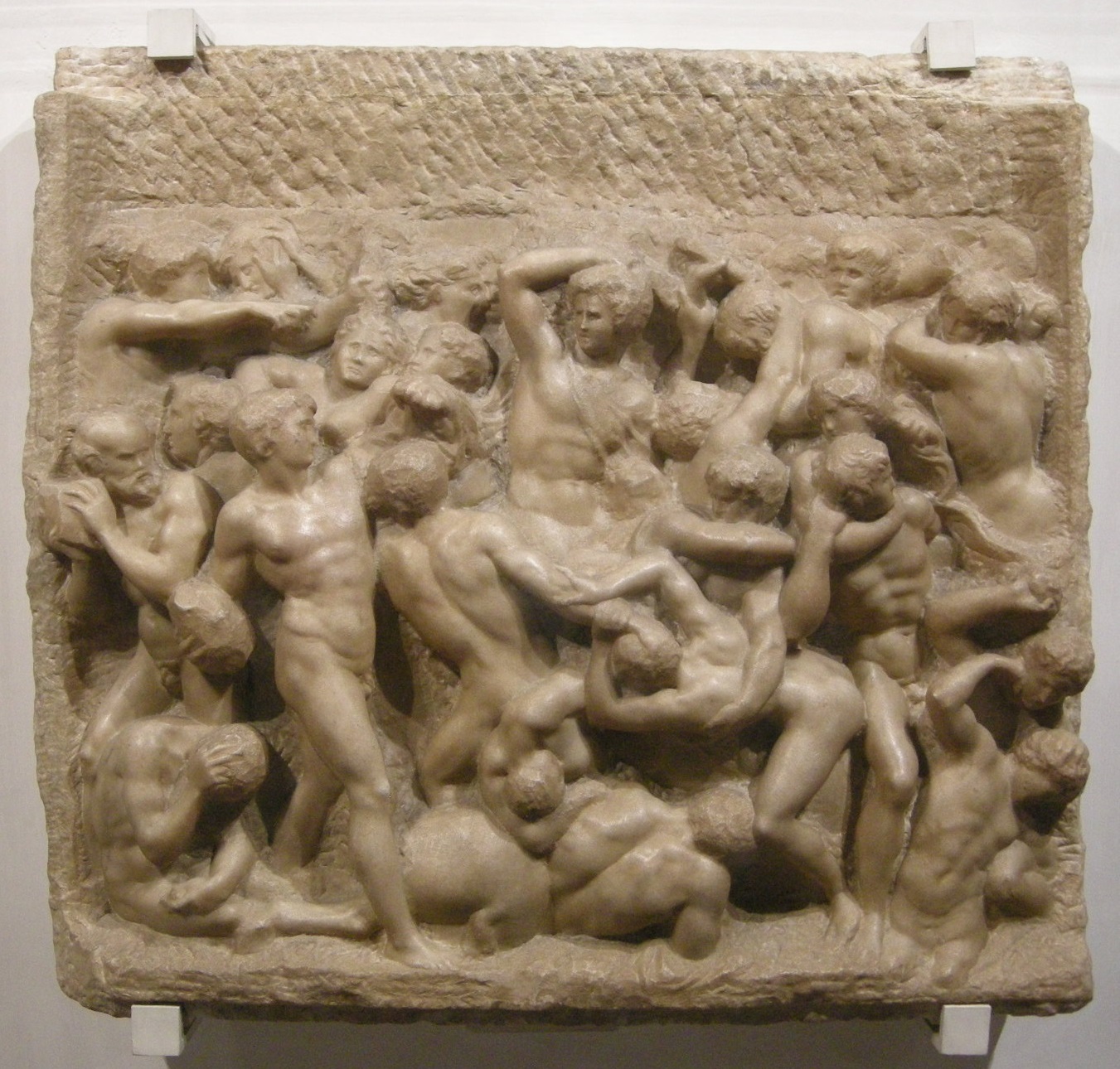 Michelangelo Buonarroti, Battle of the Centaurs, circa 1492, Florence, Casa Buonarroti
Michelangelo teaches us, therefore, that in Renaissance art, the man is at the centre. The same “discovery” of perspective by other great painters of the same era serves the same purpose: to give order to the world so that man can live in harmony with it. However, this does not mean denying the existence of what is not in order: the disorder generated by vice and sin. Look at Hans Holbein’s painting The Ambassadors.
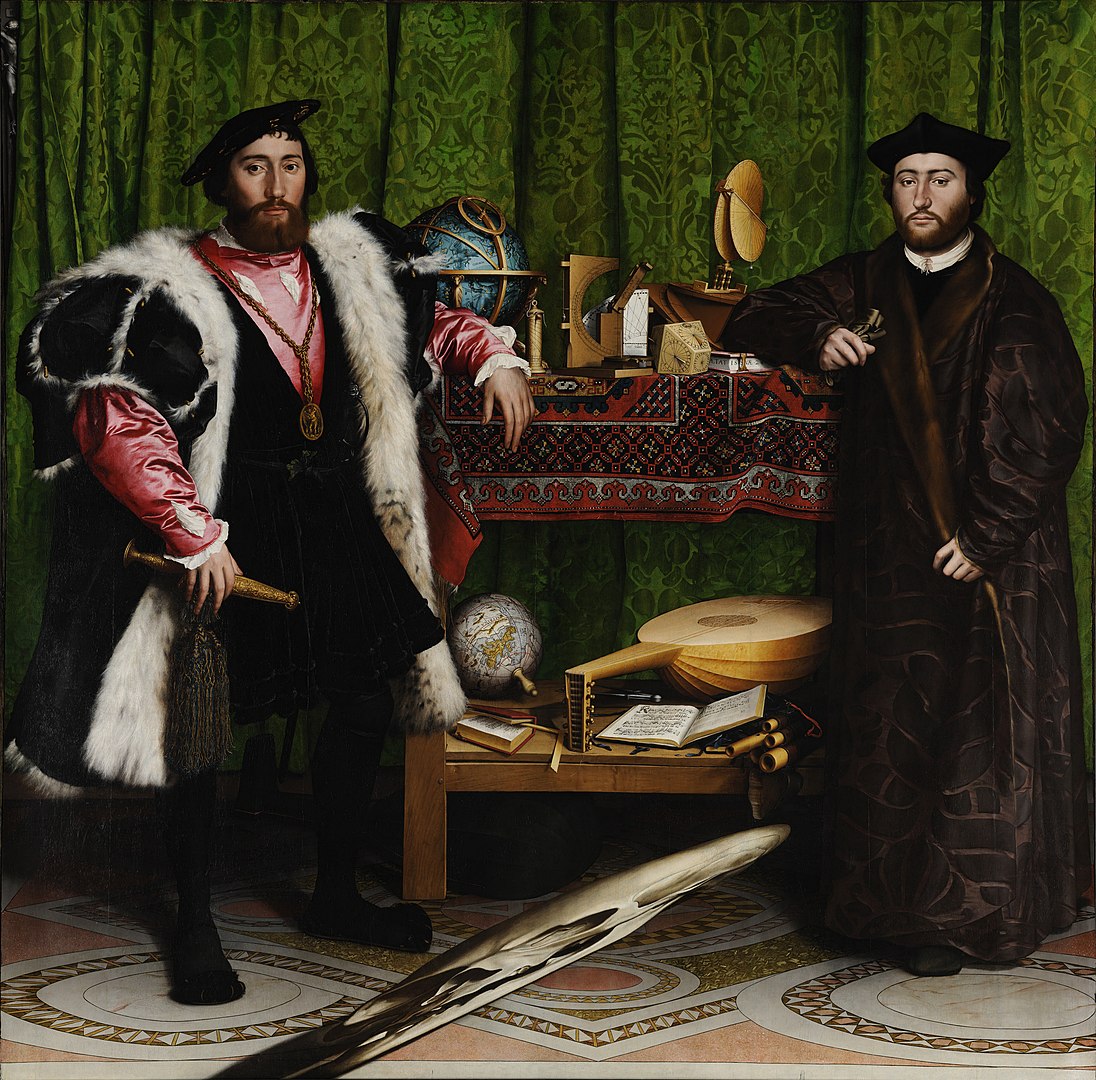
Hans Holbein the Younger, The Ambassadors, 1533, London, National Gallery
Here too, man is at the centre: the protagonists are two men active in the politics of the time; figures who had acquired a certain prestige thanks to their intellectual abilities. Here too, the serene dominance of man over the world is celebrated through knowledge that can give order and meaning to the world. For this reason, there are a celestial globe, a terrestrial globe, a lute, books, etc.
But order does not exclude disorder. And here is a broken string on the lute. And above all, the unsettling distorted figure that, when viewed from a different perspective, turns out to be a human skull. There are therefore two perspectives: one that brings order and one that reveals disorder and death.