The Age of Art Deco
Elegance shaped by industry and design
07/11/2025 Antiques
The history of Art Deco grows out of changes brought by the Industrial Revolution: iron, steel, pressed glass and chrome enabled precise, made it possible to produce objects with precision and consistency. The object was no longer a one-off handmade piece, but a designed product, created to be both functional and beautiful. This is where modern design begins: not decoration for its own sake, but form shaped in relation to function.
The revolution of Art Deco between the 1910s and the 1930s lies in the combination of this new industrial accuracy with an elegant modern aesthetic: clean lines, clear geometry, glossy surfaces and a measured sense of luxury, perfect for life in growing cities, among trains, ocean liners and the first skyscrapers.
In architecture Art Deco is instantly recognizable: stepped silhouettes rising like terraces, sunburst fans and chevron motifs carved in the shape of a V or herringbone cut into stone or metal, façades that combine iron, steel and glass with artificial lighting to create a bright and orderly rhythm. It is a clear, geometric language for the modern city, joining technical solidity with a taste for stagecraft without excess.
A perfect example is the Chrysler Building in New York dating to 1930. Its gleaming steel spire inspired by automobile hubcaps, a perfect emblem of faith in technology and industrial beauty.
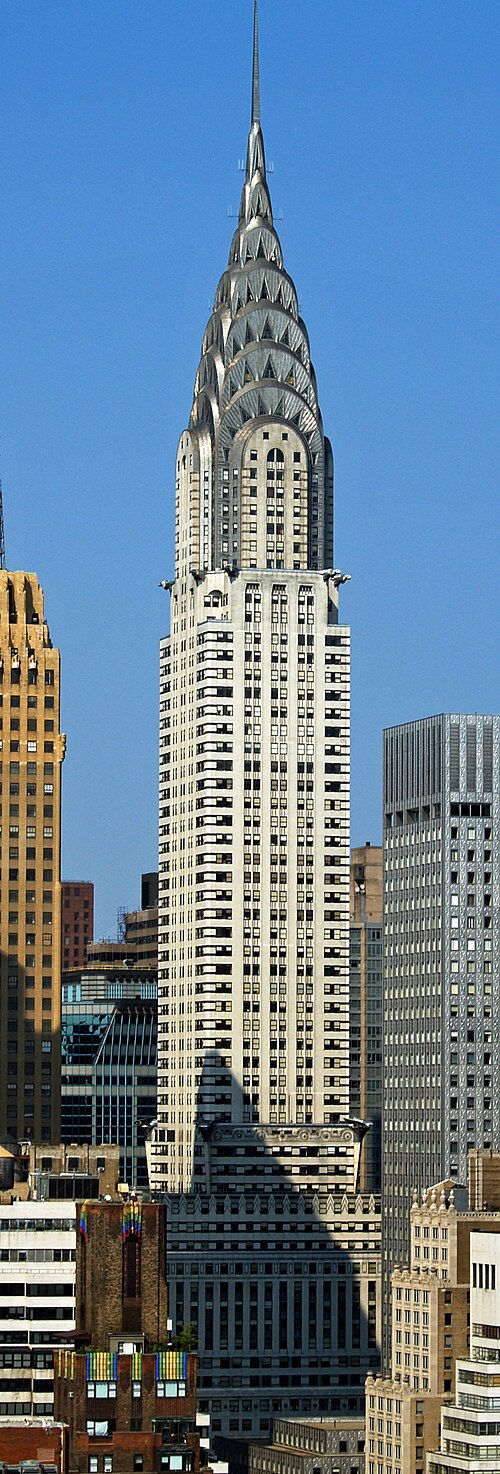
William Van Alen, Chrysler Building. 1930, New York City
But it is in design and furniture that Art Deco left its strongest mark. The International Exhibition of Modern Decorative and Industrial Arts in Paris in 1925 (Exposition internationale des arts décoratifs et industriels modernes) established the key principles: clear lines, decoration reduced to geometric or stylized natural patterns, compact surfaces animated by refined contrasts of materials. The modern object must be beautiful, functional and reproducible, not a fragile unique piece but furniture in which industry and high craftsmanship are combined together.
The furniture of Jacques Émile Ruhlmann reflects this ideal. The forms are restrained, the proportions elegant, the veneers precious and the ivory details discreet but elevating. His cabinet État at the Metropolitan Museum of Art in New York, with amaranth veneer and gilt bronze mounts, shows how decoration becomes controlled surface rather than excess.
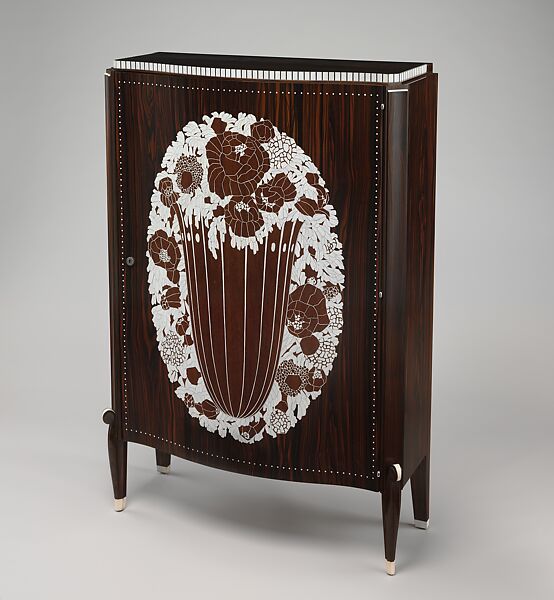
Emile-Jacques Ruhlmann, "État" Cabinet, 1922. New York, Metropolitan Museum
In glass, René Lalique made refinement compatible with industrial production. Moulds and hand finishing produced tactile vases, opalescent or transparent, with strong reliefs and occasional dark enamels that sharpen the geometry. His Tourbillons vase from 1926 at the Met translates the dynamism of the modern world into solid, luminous volume.
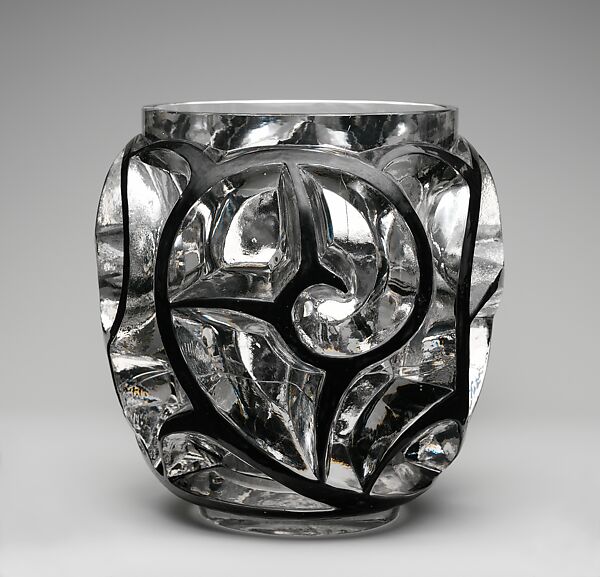
René-Jules Lalique, "Tourbillons" (Whirlwinds) Vase, 1926. New York, Metropolitan Museum
In sculpture, a key example of the Deco spirit is François Pompon. His Ours blanc (White Bear, 1922-1933), at the Musée d’Orsay, reduces the animal to pure volumes and polished planes. It is the essence of formal clarity and light.
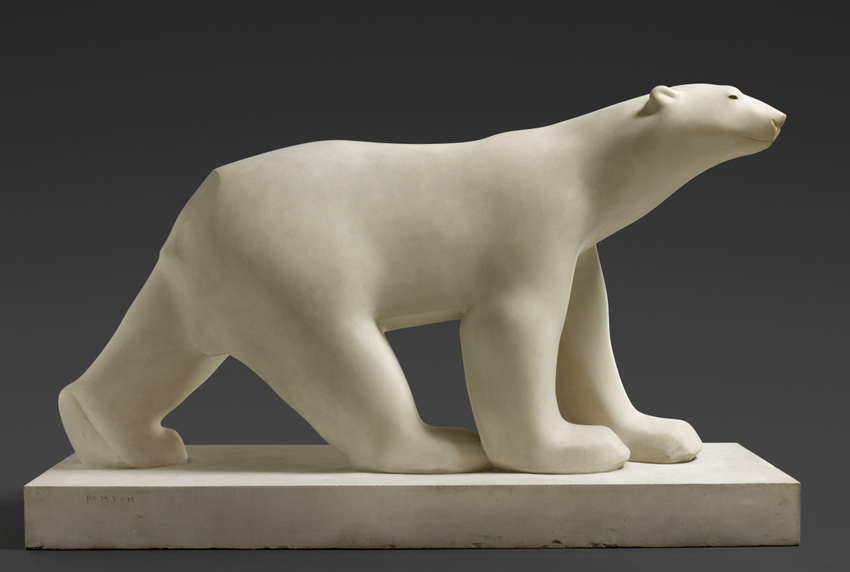
François Pompon, Ours blanc (White Bear), 1923–1933. Paris, Musée d’Orsay
Art Deco was the last great movement in which design united luxury with artisanal quality, before the post war years shifted toward mass production and standardization. Today, a hundred years later, many Art Deco furnishings and objects are regarded as true antiques, enduring witnesses to a time when modernity still spoke the language of elegance.