The Art of Peace
How artists have represented peace from antiquity to modern times
17/10/2025 Art History
The oldest and most universal aspiration of humankind has always been peace: something that art has expressed in many ways through the centuries. In ancient Greece, public images celebrated rulers and victories as symbols of order and prosperity: for example, the Alexander Mosaic (late 2nd century BC, National Archaeological Museum of Naples), a magnificent panel from the House of the Faun in Pompeii, exalting the commander and military superiority as the premise of a “peace” ensured by the victor. 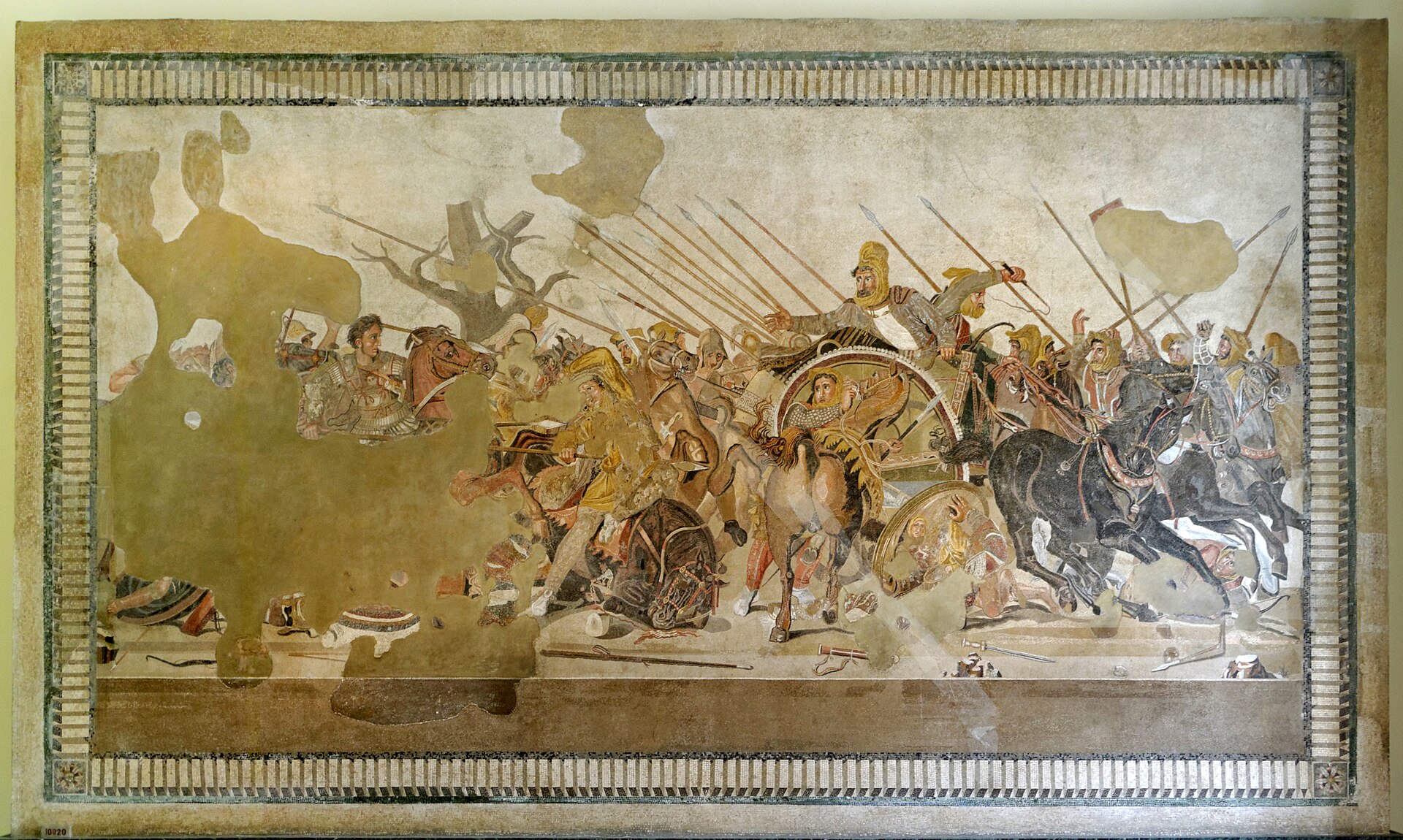 Alexander Mosaic, Late 2nd century BC. National Archaeological Museum of Naples
In Roman times, peace became something tangible, almost a public ideal to be celebrated. The Ara Pacis Augustae, built in Rome between 13 and 9 BC to honor Augustus’s return from Hispania and Gaul, embodies this vision. Its marble reliefs show families, rituals, and symbols of fertility and prosperity, expressing a sense of harmony and abundance. But behind this serene image lies a clear political message: peace was also a demonstration of imperial power and a way to glorify the emperor’s rule.
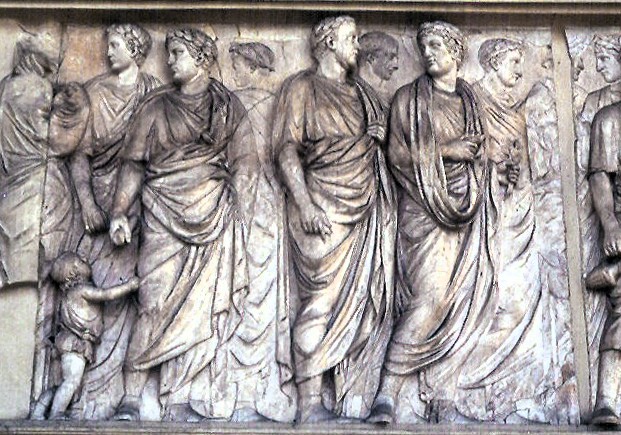
Ara Pacis Augustae (Altar of Augustan Peace), 13–9 BC Rome
During the Middle Ages, peace began to take on a moral and civic meaning. Artists often portrayed it through allegory, using symbolic figures to express abstract ideas. One of the most remarkable examples is Ambrogio Lorenzetti’s Allegory and Effects of Good and Bad Government (1338–1339, Siena, Palazzo Pubblico). In this fresco, the figure of Peace reclines calmly in the “Hall of Peace,” representing a city where justice and harmony ensure the safety of daily life. It is a vision of peace that comes from balance and wisdom. 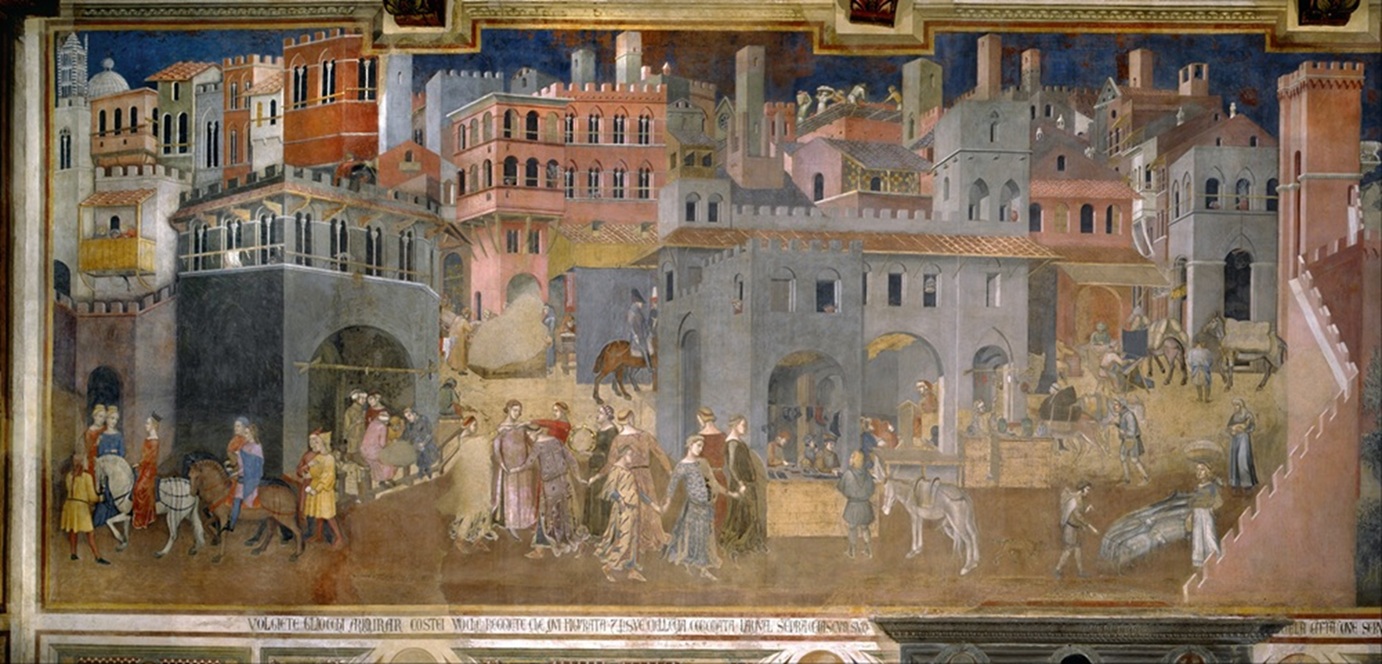 Ambrogio Lorenzetti, Peace. Allegory of Good Government (detail), 1338–1339. Siena, Palazzo Pubblico.
In the Renaissance, Raphael offered a powerful image of peace in The Meeting of Leo the Great and Attila (1513–1514, Vatican Museums). The fresco recounts how Pope Leo I stopped Attila’s advance toward Rome. According to legend, the vision of Saints Peter and Paul appearing in the sky frightened the king of the Huns and convinced him to retreat. Historical accounts, however, speak of diplomacy, fatigue, and strategic calculation. Raphael blends these versions into a single vision, turning a political negotiation into a symbol of peace born from reason and faith.
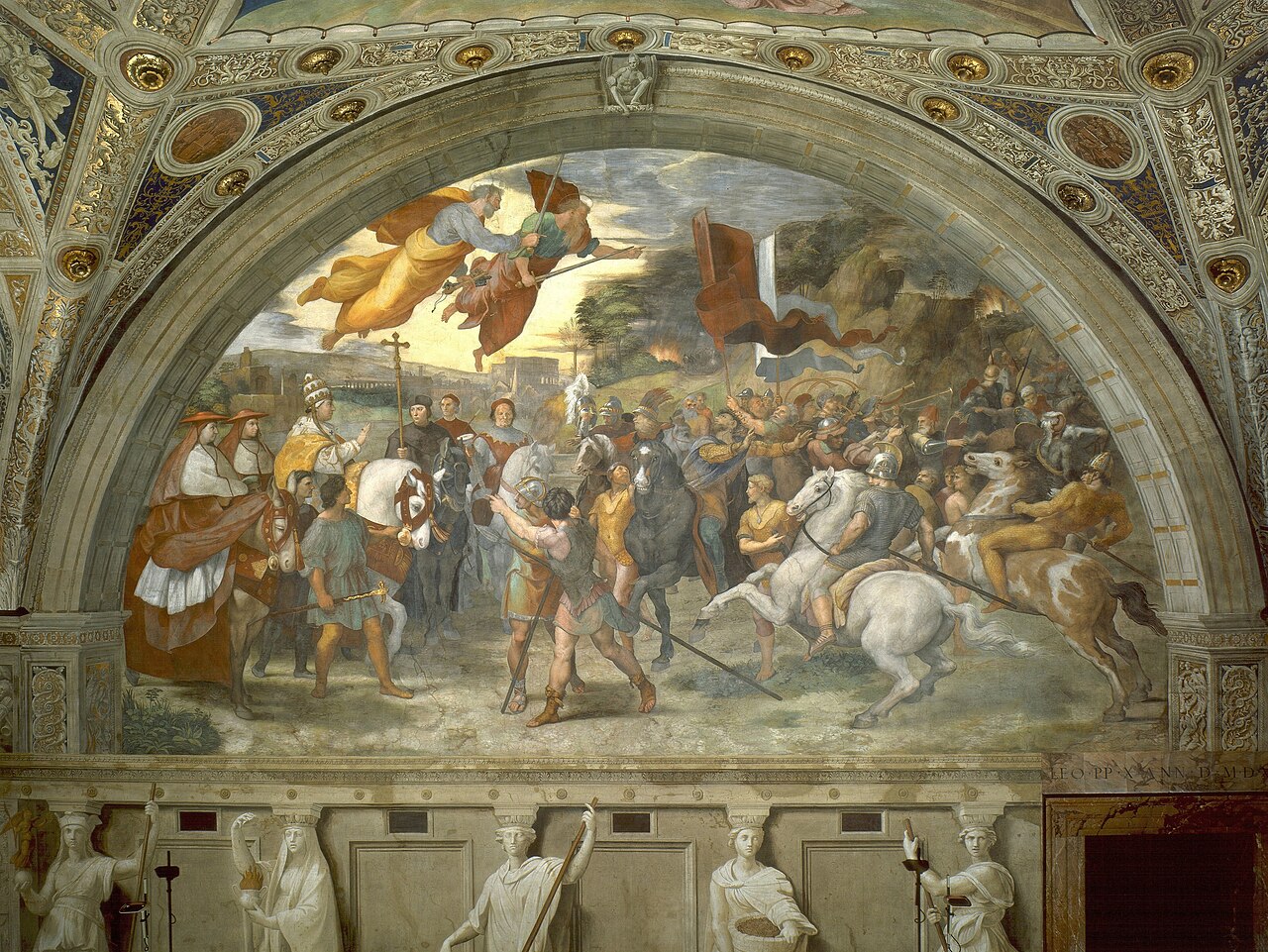
Raphael, The Meeting of Leo the Great and Attila, 1513–1514. Vatican Museums, Raphael Rooms
In the eighteenth century, political allegory was renewed with theatrical splendor: Corrado Giaquinto’s Allegory of Justice and Peace (1753–1754, Madrid, Museo Nacional del Prado) portrays the two virtues embracing, signifying that the equity of laws is the foundation of public peace, in harmony with the policies of Ferdinand VI. 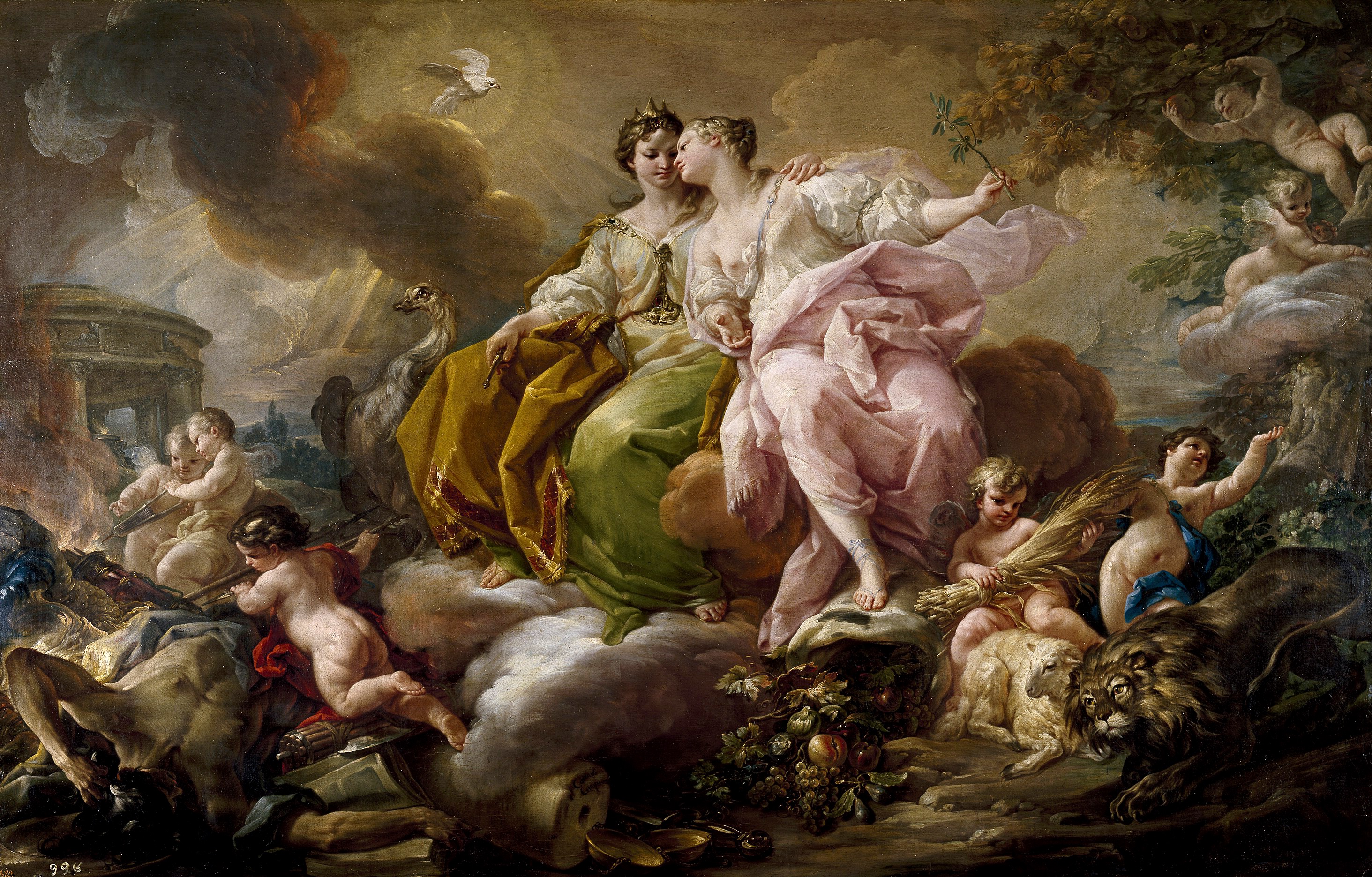 Corrado Giaquinto, Allegory of Justice and Peace, 1753–1754. Madrid, Museo Nacional del Prado
In the nineteenth century, amid revolutions, nationalisms, and wars of independence, art no longer serves only power but becomes a critical instrument. Francisco Goya’s The Third of May 1808 (1814, Madrid, Museo del Prado) exposes the horror of Napoleonic violence with striking emotional force. The light illuminating the man about to be executed turns him into a symbol of innocence and sacrifice. In this contrast between light and darkness, Goya evokes a deep longing for peace, one that is not imposed by power, but restored through justice and humanity.
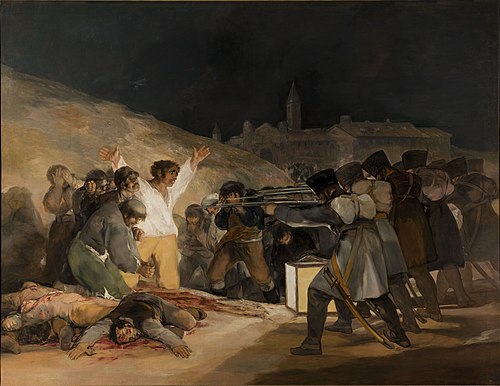
Francisco Goya, The Third of May 1808, 1814, Madrid, Museo del Prado
In the twentieth century, after two world wars, the most powerful image does not depict peace directly but invokes it by showing the horror that makes it necessary: Pablo Picasso’s Guernica (1937, Madrid, Museo Reina Sofía) breaks into a monochrome scream of horses, mothers, lamps, and ruins, turning collective suffering into a universal icon against violence.
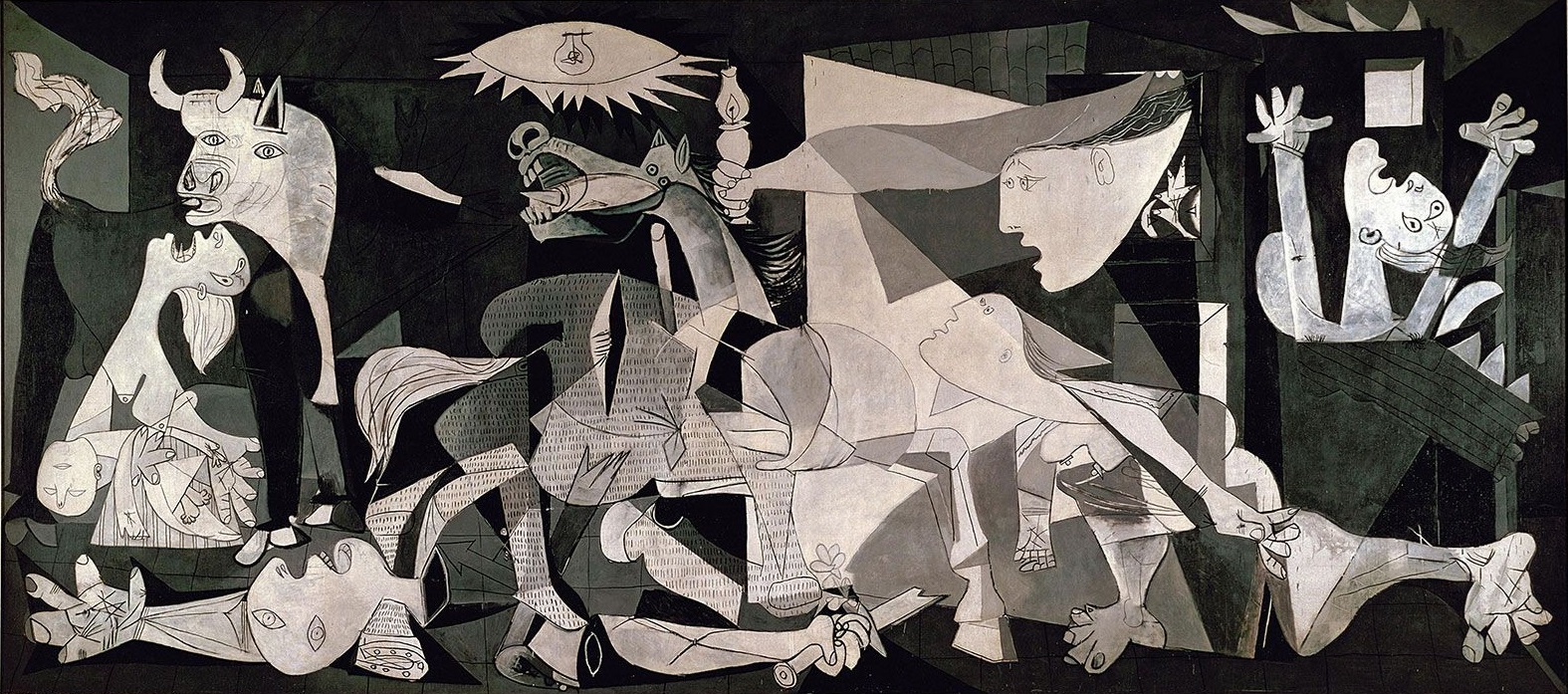 Pablo Picasso, Guernica, 1937. Madrid, Museo Reina Sofía
In more recent years, the Palestinian painter Ismail Shammout depicted in his works the human aspiration for peace not only by denouncing the brutality of war, but above all by showing the face that peace should have: that of a united humanity. In We Are the Wall (2004), Ismail Shammout clearly conveys that the only truly insurmountable wall, and the only border that should never be crossed, is the one that separates brutal violence from humanity.
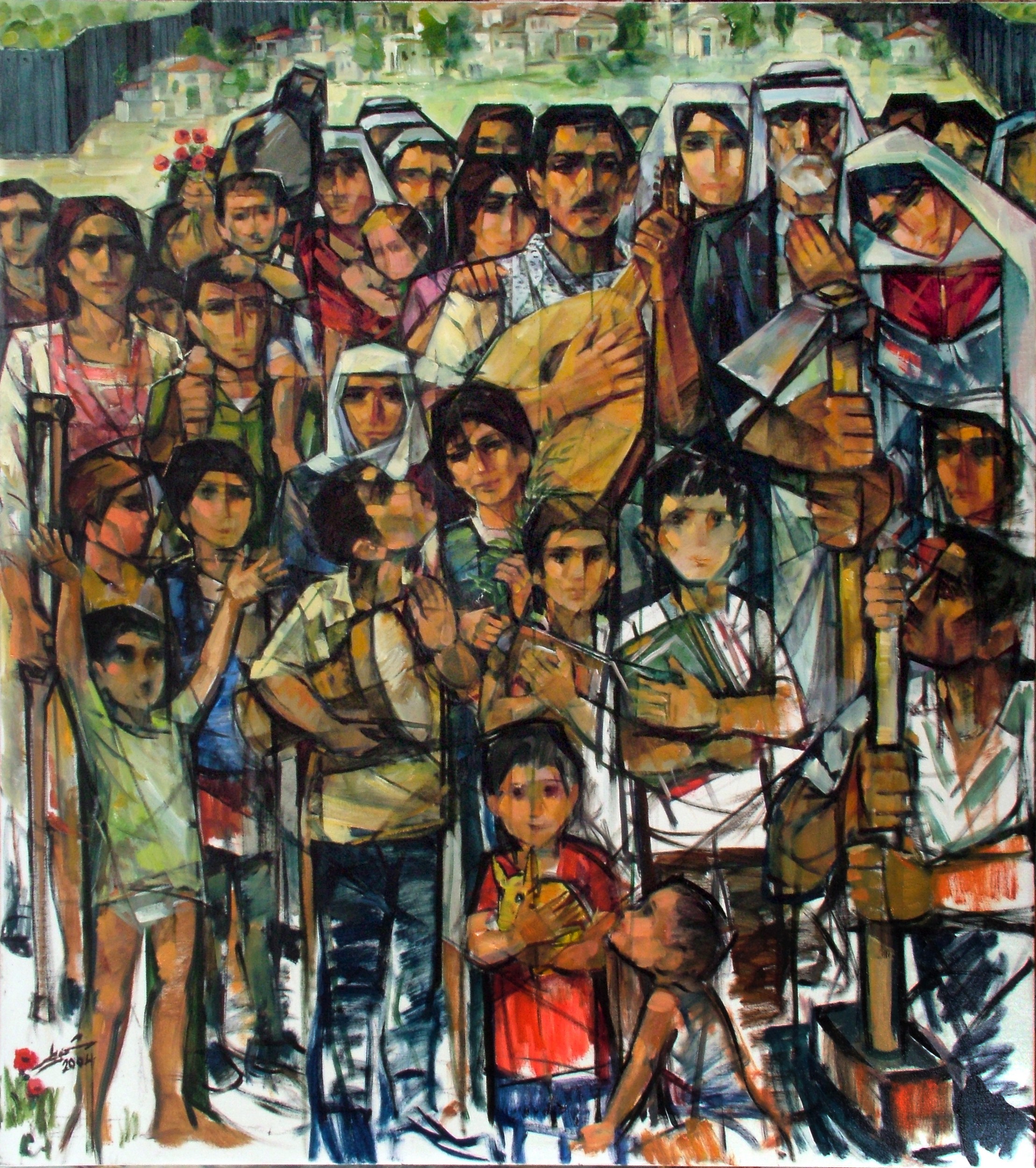 Ismail Shammout, We Are the Wall, 2004
Thus, between the celebration of rulers and propaganda, between civic allegories, miraculous diplomacies, and modern denunciations, the representation of peace in art tells not only of an ideal but also of the means by which societies have tried to achieve it. If antiquity promised peace as imposed order, the most conscious images remind us that true peace is born from justice, freedom, and memory.