The History of Chess in Art
From Medieval frescoes to modern cinema
26/09/2025 Art History
From the beginning, the game of chess has inspired great fascination not only as an exercise in strategic skill, but also as a cultural, moral, and human mirror of mankind.
The origins of the game go back to India in the 6th–7th centuries, where there was a game called caturaṅga. From there it spread to Persia and then, with the Arab conquest of Persia, it became established in the Islamic world. Later it entered Europe, gradually taking on the form that we know today.
Chess was not only a leisure activity: in the medieval and Renaissance world it could have a very strong educational value. On the one hand, it served as mental training: it stimulated the ability to plan, prudence and patience. On the other hand, it became a metaphor of life, death, destiny, Good and Evil, human limitations.
One of the most famous examples is Albertus Pictor’s fresco Death Playing Chess (ca. 1480–1490, Täby kyrkby, Sweden). Here Death is not only a threatening figure, but active, because it plays. It is a powerful image, a symbol of mortality, it represents the match that all of us play with life. Both sacred and profane art of the time often used such allegories to remind people of vanity.
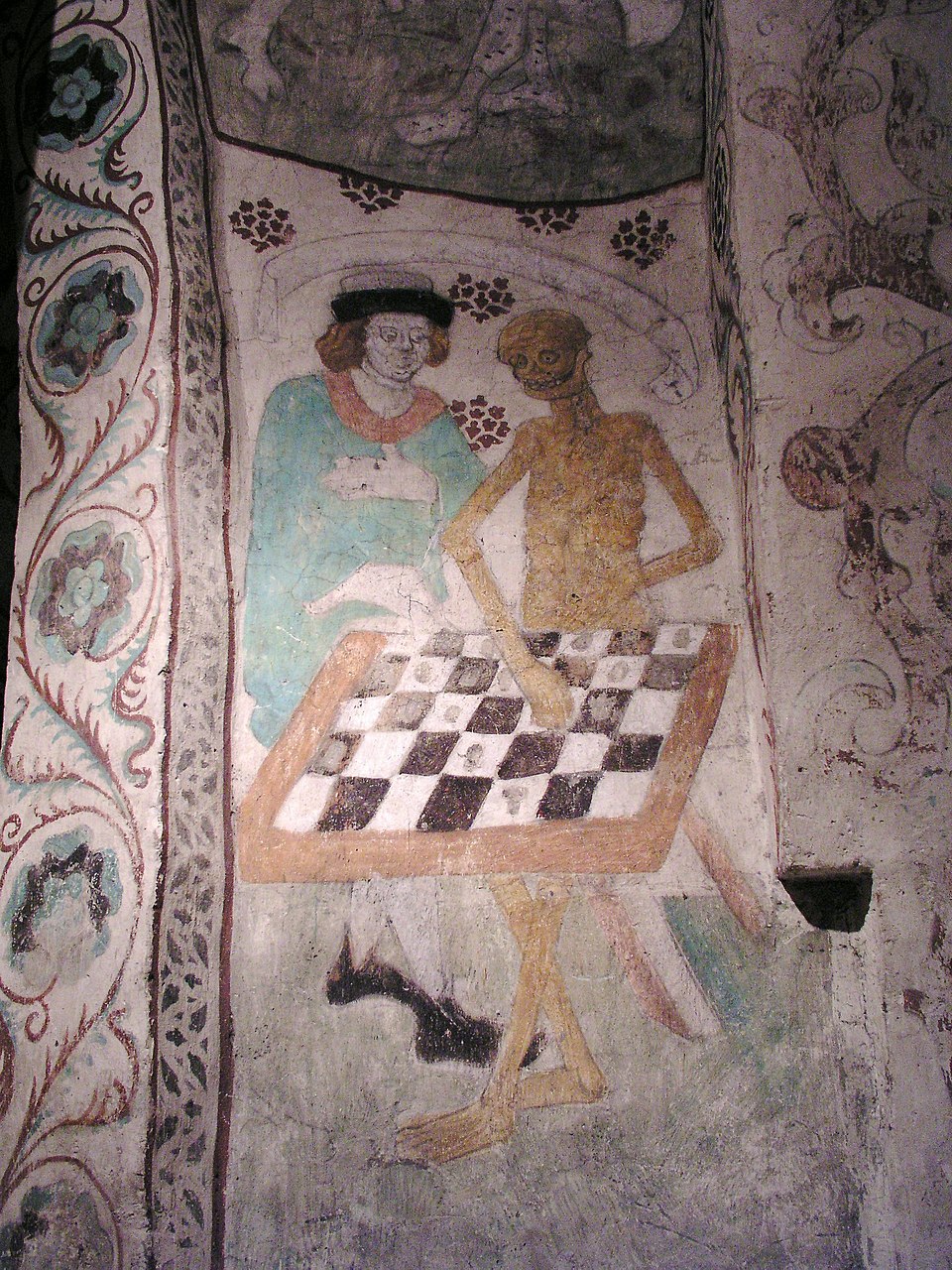
Albertus Pictor, Death Playing Chess (ca. 1480–1490), Täby Church, Stockholm, Sweden
One of the most famous films inspired by this image is Ingmar Bergman’s The Seventh Seal (1957). In the film, a knight returns from the Crusades to a Europe devastated by the plague and plays a game of chess with Death, hoping to win time to search for the meaning of life. The scene of the chessboard as a symbol of defiance against death remains among the most powerful in world cinema.
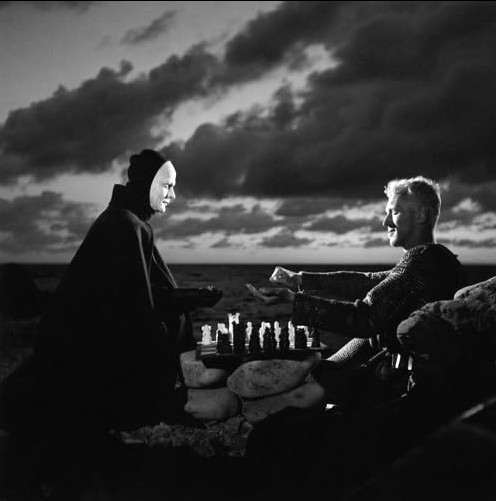
Scene from the film The Seventh Seal (Ingmar Bergman, 1957)
To understand how chess was also a sign of culture, civilization, and education, one can look at works such as The Chess Players by Liberale da Verona (ca. 1475, Metropolitan Museum of New York). In that painting we see gentlemen engaged in a live game in a courtly domestic setting. It is not only the representation of the game itself, but also of the rules of company: good manners, moderation, the ideal of nobility. The setting, the clothing, the gestures, the way the pieces are arranged: everything contributes to suggesting that chess was a part of the “art of living” of the time.
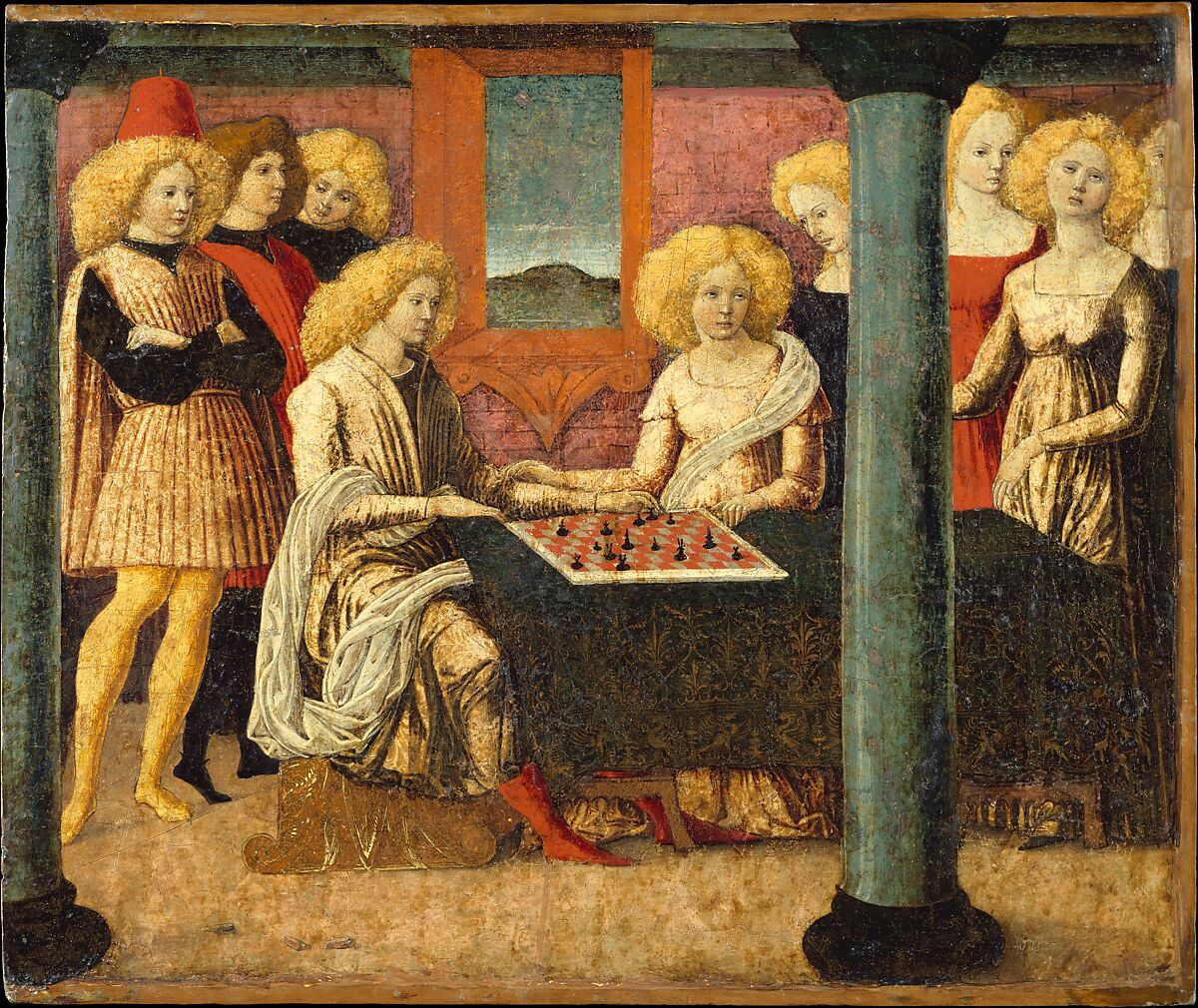
Liberale da Verona, The Chess Players (ca. 1475), Metropolitan Museum of Art, New York
Finally, another significant is The Game of Chess by the Italian painter Sofonisba Anguissola, painted in 1555. In this work, Anguissola portrays her sisters while they play chess. The sisters are not idealized figures but normal people with emotions: the winner is smiling and the other who are reacting to the move. Anguissola shows that the game is not only entertainment, but an occasion for dialogue and relationship.
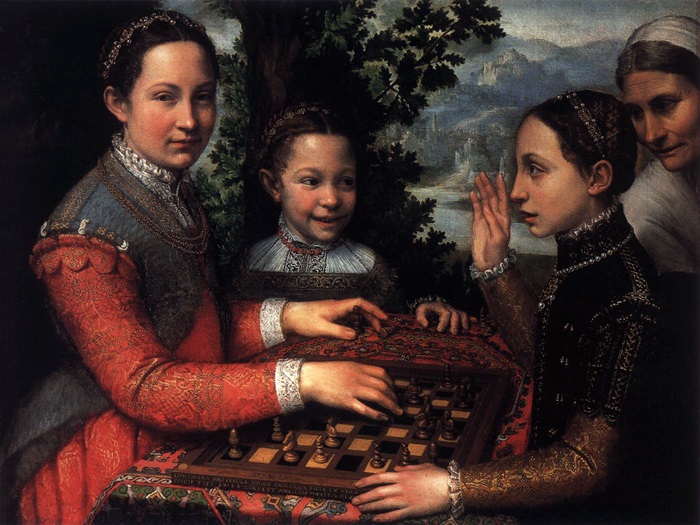
Sofonisba Anguissola, The Game of Chess, (1555),
National Museum in Poznań, Poznań