The Universal Language of Fables
A Journey from Ancient Tales to Modern Interpretations. From Kalīla wa Dimna to La Fontaine
03/06/2024 Art Collection
It is precisely this universally human characteristic of the fable that the exhibition “From Kalila wa Dimna to La Fontaine: Travelling through Fables”, hosted by the Louvre Abu Dhabi (from March 26 to July 21, 2024), aims to explore. The museum’s halls feature significant handwritten testimonies from prestigious collections such as that of the Bibliothèque Nationale de France, narrating the journey of the literary genre of the fable through time, space, and different cultures. This journey originates from two different places, Greece and India.
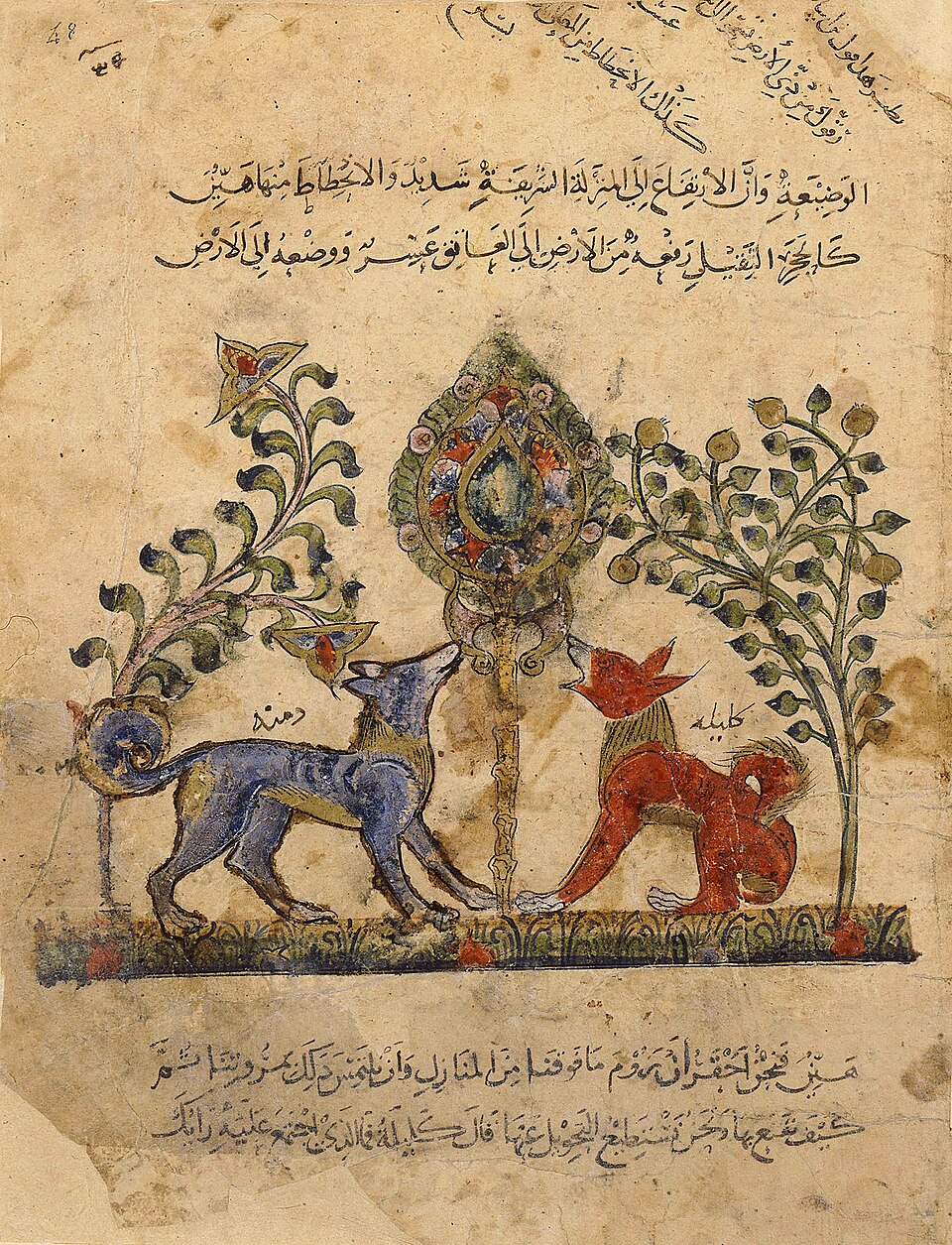
Ibn al-Muqaffa’ – Kalīla wa Dimna – The Two Jackals Kalīla and Dimna c. 1220, Paris, BnF, MSS, Arabe 3465, f. 48
The father of Western fable can be considered Aesop, the legendary author of over three hundred fables who lived, probably, in the 7th century BC. Like Homer, the author known for being the creator of the two great epic poems, the Iliad and the Odyssey, very little is known about Aesop. What has been passed down about him is the legendary figure of a deformed man, born a slave and despised by all, but who managed through his stories to show the contradictions and hypocrisies of men. His fables, indeed, like all fables in general, always have a didactic and moral purpose.
In the East, the origins of the fable date back to the Panchatantra (“The five treaties“), an Indian collection of fables whose original version in Sanskrit unfortunately has not reached us. However, we are able to know this important work thanks to the translation into Arabic, probably from a version in Pahlavi, written in the 8th century AD by the Persian Ibn al-Muqaffa’, considered one of the fathers of Arabic prose, with the title “Kalīla wa-Dimna” (from the names of the two jackals protagonists). It is thanks to this Arabic translation that the ancient Indian collection spread in the West: for example, already in the 11th century, the work was translated into Greek, while the first versions in Old Spanish and Latin date back to the following century.
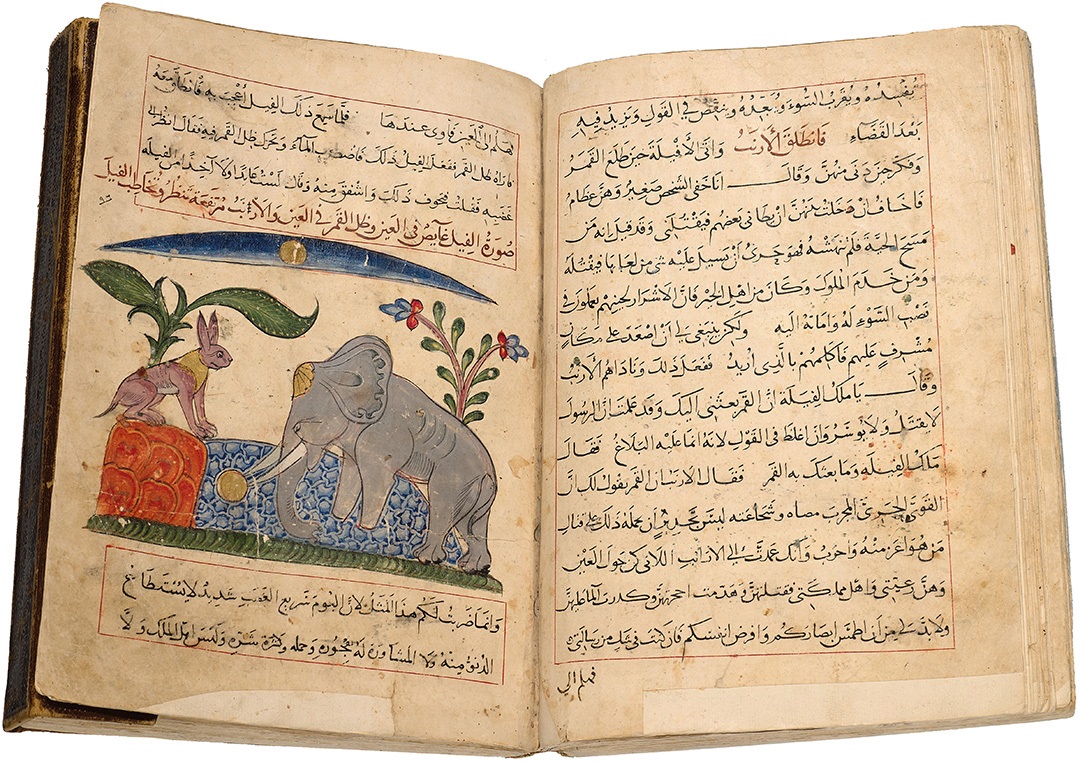
Finally, the ancient and extensive legacy of the fable was gathered by the ingenious French writer Jean de La Fontaine (1621-1695), famous for having published in 1668 “Fables choisies mises, en vers par M. de La Fontaine” (“Selected Fables, written in verse by Mr. de La Fontaine“). It was precisely in a subsequent edition of this collection of fables (1679) that La Fontaine integrated, alongside Western sources, those from the East with the addition of fables from “Kalīla wa-Dimna“.
Furthermore, the exhibition also features works by great masters of painting, such as Jean-Honoré Nicolas Fragonard (1732-1806) with a work that in full Rococo style translates the fable “Perrette and the Milk Jug” into mundane forms; or like Marc Chagall (1887-1985) who from 1927 to 1931 worked to illustrate the fables of Jean de La Fontaine.
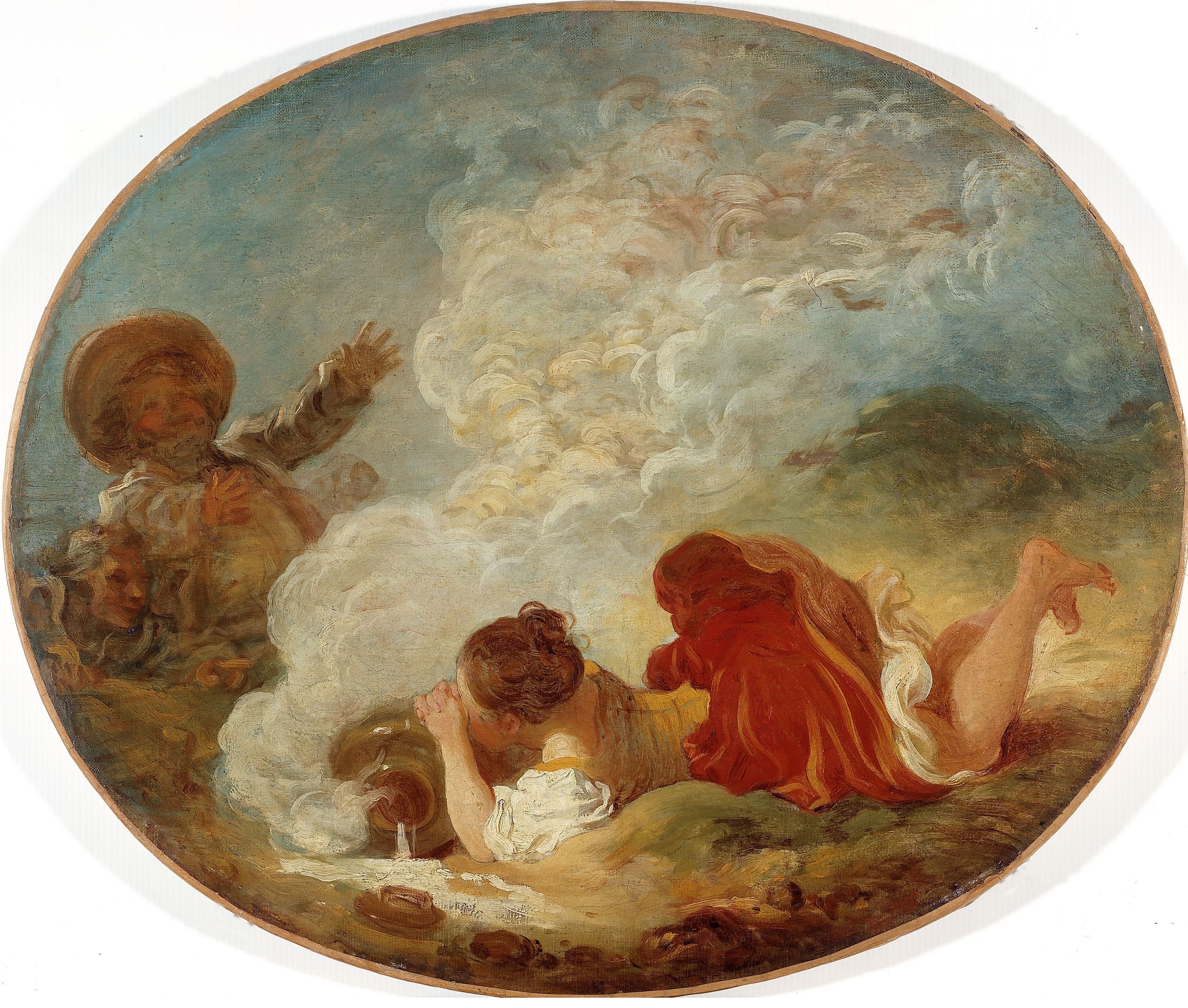
Jean-Honoré Fragonard, Perrette and the Milk Jug, c. 1770, Paris, Musee Cognacq-Jay
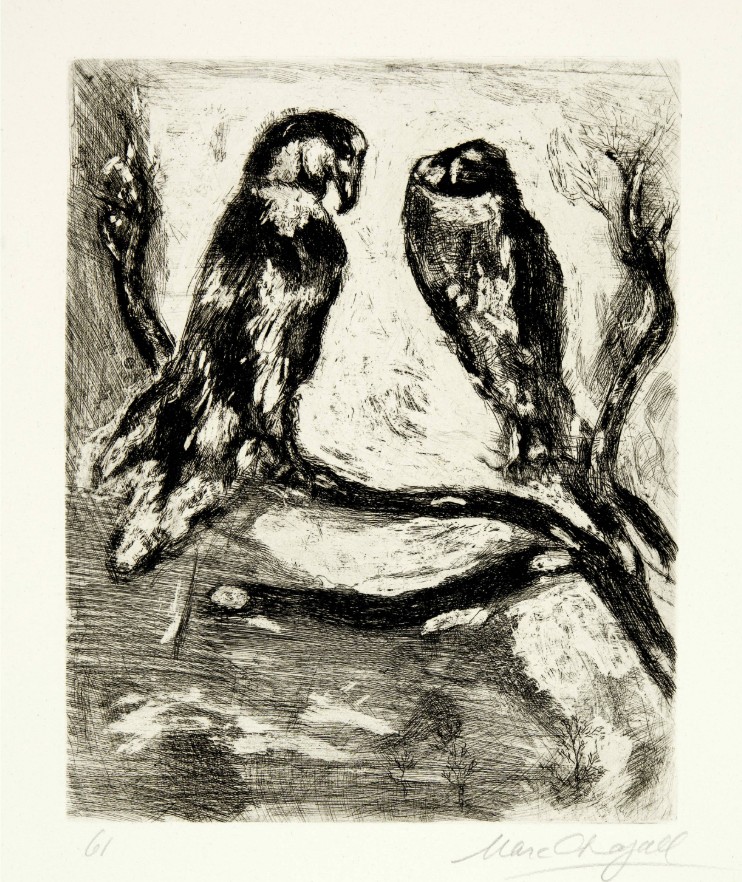
Marc Chagall, The Two Pigeons, 1926-1930, Château-Thierry, Musee Jean de La Fontaine
The exhibition concludes with a section dedicated to the influence of the Fable in popular mass production culture and contemporary art. Interesting, in this last part of the exhibition, is the work of the Egyptian artist Nabil Boutros “Récurrences” (“Recurring events“) in which, through the oriental technique of origami on photographic paper, an Ox, a Jackal, and a Lion are reproduced. Each animal is therefore covered with photographs of people with whom it identifies, thus clearly representing the anthropomorphic nature of the animals in fairy tales from around the world.
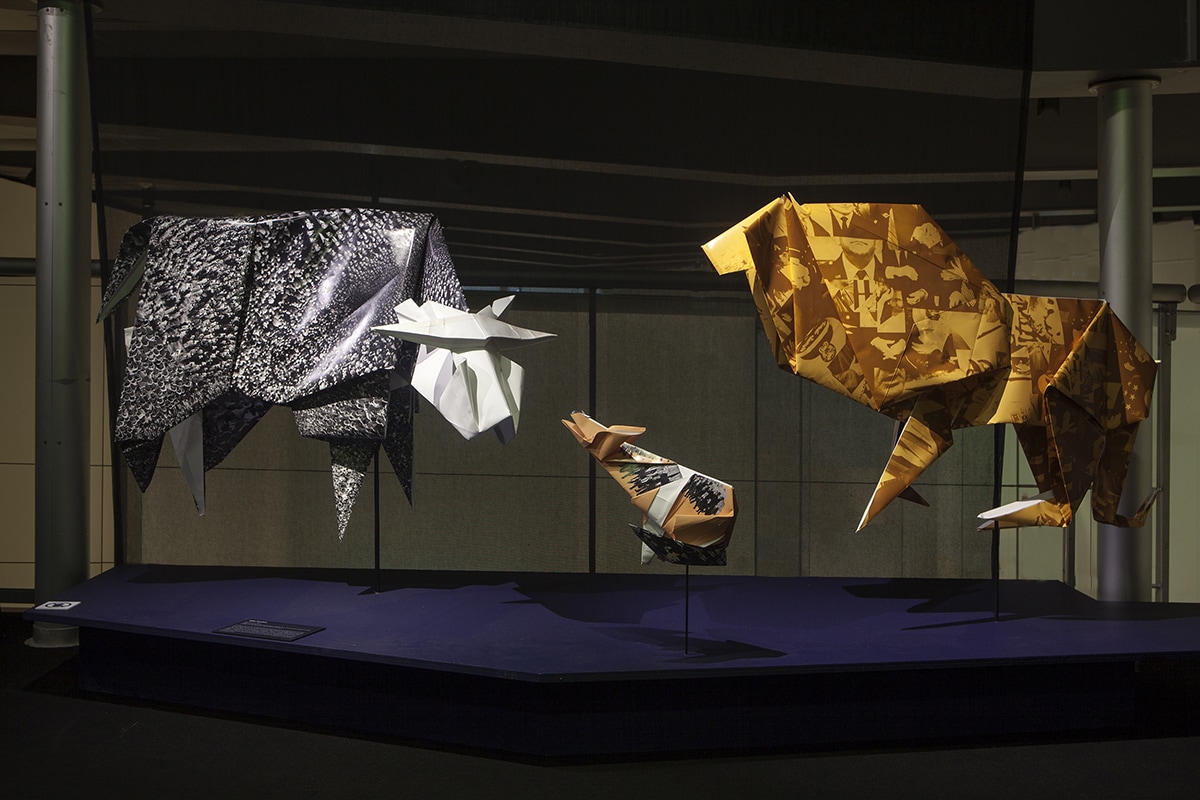
Nabil Bourtros, Récurrences (Recurring events), 2015, Paris, Musee de l'Institut du Monde Arabe